 Radical Trainer
How to learn Chinese radicals as a beginner
A radical is the one component a dictionary uses to file a character. Other components may hint at meaning or sound. Learn a small set well, spot them inside real characters, and treat them as a reading tool rather than a shortcut to fluency.
Radicals versus components
Chinese dictionaries file every character under one 部首 bùshǒu, its dictionary radical. This is an indexing choice. A particular dictionary picks one component so readers can look the character up, and different dictionaries do not always pick the same one.
Most characters contain more than one functional component. One part may point toward meaning, another may hint at sound, and some parts are there for historical reasons that are hard to see today. A familiar shape can also sit inside a character without being that character's indexing radical. So when you learn 口 kǒu (mouth), expect to see it in many places, but do not assume it is always the radical or always about mouths.
A worked example: 妈
妈 mā means mother. It has two components:
- 女 nǚ (woman) on the left is the meaning component. It points toward a female family member.
- 马 mǎ (horse) on the right is the sound component. It has nothing to do with horses here.
Notice the tones. 马 is mǎ with the third tone, but 妈 is mā with the first tone. A sound component gives a hint, sometimes close, sometimes distant. You still need to learn the pronunciation of each whole character.
214, 201, and variant forms
The list of 214 radicals that many learners hear about comes from the historical Kangxi dictionary tradition. Modern dictionaries use their own lists. Radical Trainer teaches its own catalog of 201 radicals arranged in 40 groups. Use 214 when referring to the historical reference list and 201 when describing this app's curriculum. The curriculum is a teaching sequence, not a complete Kangxi reference table.
Many radicals also have variant forms: different ways of writing the same component depending on where it sits. 水 shuǐ (water) usually becomes 氵 on the left, as in 河 hé (river). 手 shǒu (hand) becomes 扌, as in 打 dǎ (hit). A variant is a writing form. It does not add a new meaning, and it does not give the whole character's pronunciation: 河 is read hé, never shuǐ.
What radicals can and cannot do for you
- They can help you break new characters into parts you already know, speed up dictionary lookups, and give a rough meaning category.
- They cannot give exact meanings, reliably predict pronunciation, or replace learning vocabulary, grammar, and listening.
A one-week starter plan
Plan on about 15 minutes a day. Start from the common radicals starter list.
- Day 1: 人 口 手 心. Learn meaning, pinyin, and the variants 亻 扌 忄. Write each one three times.
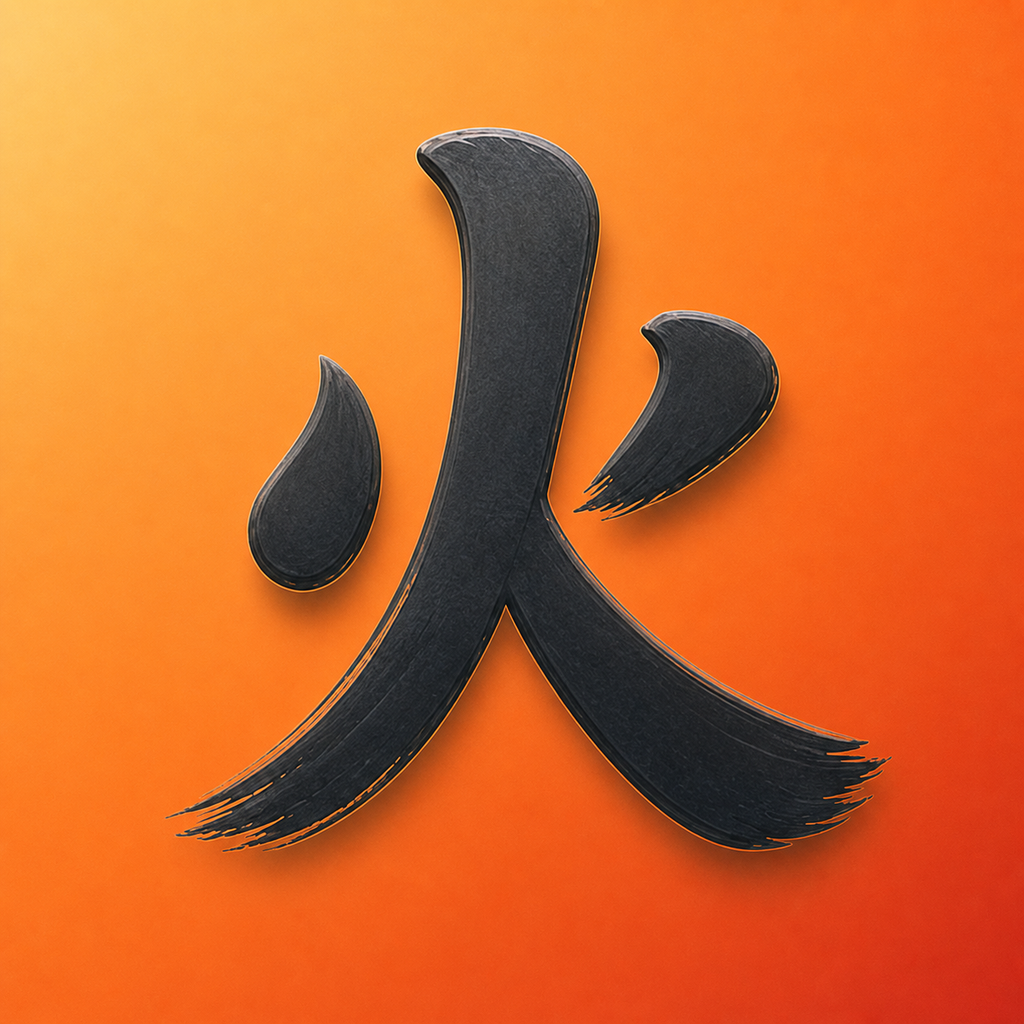
- Day 2: 水 火 木 土 山. Note 氵 and 灬. Find each in one example character. The water radical guide is a good first deep dive.
- Day 3: Recall days 1 and 2 before looking anything up. Add 耳 and 足.
- Day 4: Sort ten characters by their left or bottom component (exercise below).
- Day 5: Add 女 子 日 月 目.
- Day 6: Shuffle the flashcards, covering the meaning side each time.
- Day 7: Take the starter quiz, list what you missed, and choose your next group.
Practice: the Day 4 sort
Group these by the component that gives a meaning hint: 你 他 打 拉 河 洗 灯 林 地 忙.
Show answer
- 亻 person: 你 nǐ (you), 他 tā (he)
- 扌 hand: 打 dǎ (hit), 拉 lā (pull)
- 氵 water: 河 hé (river), 洗 xǐ (wash)
- 火 fire: 灯 dēng (lamp)
- 木 wood: 林 lín (woods)
- 土 earth: 地 dì (ground)
- 忄 heart: 忙 máng (busy)